The 146th IOC Session has approved a reform that goes far beyond a technical amendment to the Olympic Charter. It is not just about adjusting words, procedures or criteria, but about changing the way the Olympic Movement wants to look to the future, with greater flexibility and a more dynamic Olympic programme. An evaluation based on disciplines, not only on sports. Also, a new interpretation of political neutrality and a philosophy that seeks to adapt to a more unstable, more demanding and far less predictable world than the one that existed a decade ago.
On paper, everything seems logical. The IOC needs to protect the viability of the Games, control their size, reduce unnecessary burdens, respond to new geopolitical realities and offer organisers a more manageable model. Nobody disputes that the Olympic Movement must evolve. It always has. But every major reform leaves one question: what was wrong yesterday?
Samaranch’s support
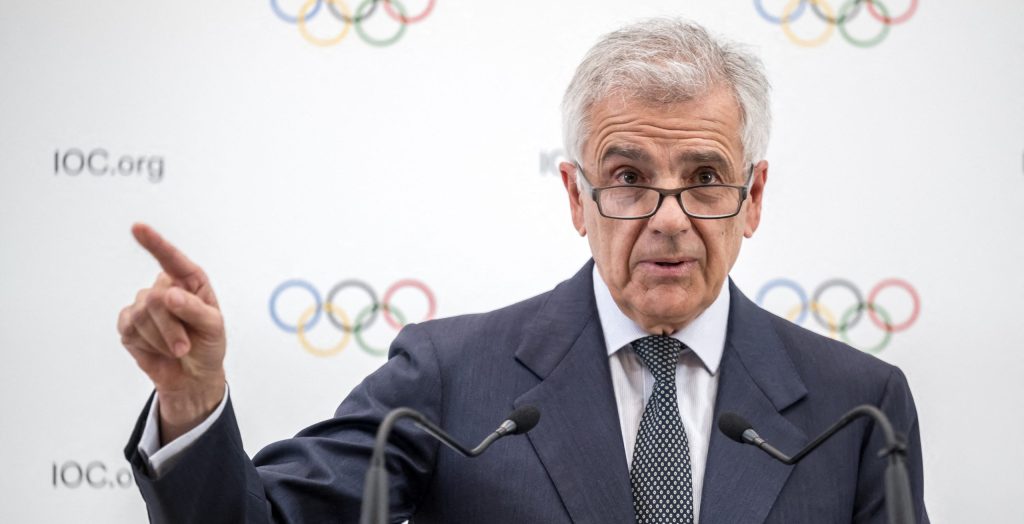
Juan Antonio Samaranch has publicly defended these reforms and presented them as a necessary adaptation to protect the independence and future of the Olympic Movement. His argument makes sense because international sport no longer operates in a stable environment. Wars, sanctions, boycotts, political pressure, commercial interests, new audiences and the growing difficulty of organising major events force the IOC to move more quickly.
The doubt arises when trying to understand what this change means in relation to the previous model. Samaranch does not come to this discussion from the outside, as he was IOC Vice-President and a member of the Executive Board during key years of Thomas Bach’s presidency. He was therefore part of the institutional core that supported, developed and defended the governance model that is now beginning to change. That model was built over years and was presented as modern, useful and sufficient to guide the Olympic Movement through a complex period. So, does that mean the previous model no longer fully worked?
Evolution or correction
There may be a simple explanation. Institutions evolve and what worked yesterday may need adjustments today. There may also be another reading, one that suggests that perhaps some parts of the previous model had become outdated or no longer useful. Perhaps the promised flexibility was not enough and political neutrality needed greater solidity. Perhaps the Olympic programme, as it was designed, no longer offered the answers the IOC needed for the coming cycles.
The difference between one interpretation and the other matters because it is a question of institutional trust. International Federations, National Olympic Committees, athletes, sponsors and organisers do not only need to know which rules are approved. They also need to understand why they are changed, what problem they solve and which part of the previous model is no longer considered sufficient. Governance is not only about change, but about explaining change.
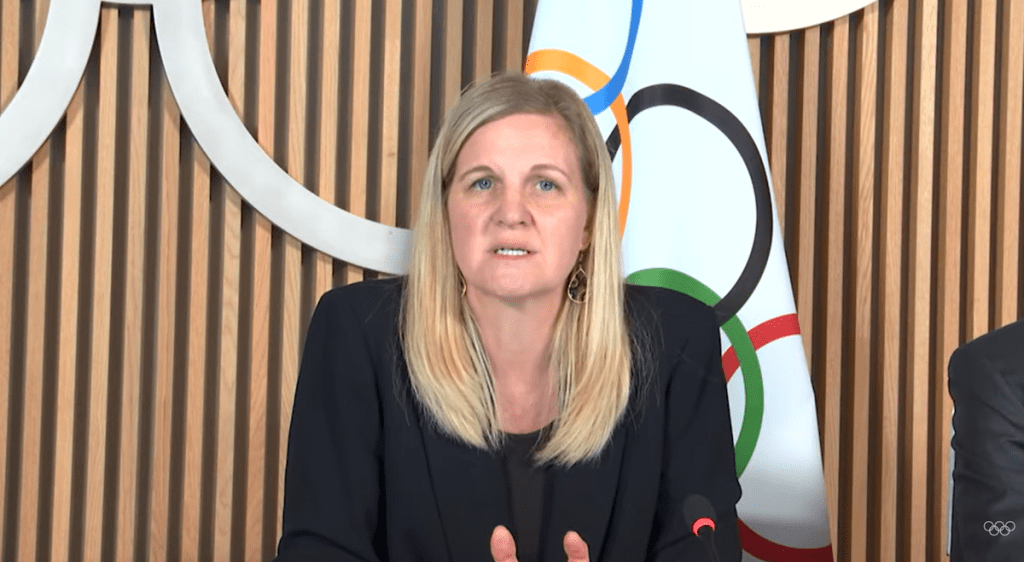
Kirsty Coventry’s first major moment
The reform also arrives under the presidency of Kirsty Coventry, who was also part of the IOC Executive Board during the Bach era. She is not a president coming from outside the system to break with everything that came before. She is a president born within the Olympic Movement itself, shaped by its structures and elected to lead it into a new era. So, are we witnessing the natural continuation of the previous agenda or a profound correction presented in the language of continuity? Both answers can coexist. The IOC may be trying to protect what it considers essential while, at the same time, correcting what it believes no longer works.
Another interpretation is that every new president needs to set a direction. Every new era needs to find its own language, and Coventry has begun hers with a clear message: the Olympic Movement must be more flexible, faster and more agile in its decision-making. However, someone will have to pay the price of that flexibility.
Disciplines above sports
One of the most relevant changes is the move towards an evaluation more focused on disciplines. Not all disciplines have the same cost, the same appeal, the same operational complexity or the same strategic value for an Olympic Games. Evaluating them individually may allow for more precise decisions and avoid overly rigid debates. But that logic also changes the balance within International Federations.
Until now, many disciplines felt protected under the umbrella of their sport. From now on, they may begin to feel examined separately. That can drive innovation, force sports products to improve and open space for emerging disciplines. It can also generate much tougher internal competition.
If a discipline has a bigger audience, greater commercial interest or fits better with the needs of a host city, will it receive more resources? What will happen to disciplines that are less television-friendly, less well known or more expensive to organise? Will they be able to plan long-term or will they live dependent on each Olympic evaluation? Will every federation end up organising its internal strategy around which discipline has the best chance of surviving within the programme?
Olympic recognition
The other major question is the real value of Olympic recognition. For decades, being part of the Olympic environment has been much more than a label: credibility, access to governments, a tool to attract sponsors, a promise for athletes, a foundation that allowed federations and national committees to plan with a certain degree of stability…
But if presence in the Olympic programme becomes more dynamic, the practical meaning of that recognition also changes. What exactly does being recognised by the IOC guarantee? Belonging to the Olympic family? Having a chance to enter the Games? Keeping a place only as long as the criteria allow? Living under permanent evaluation? These are doubts that International Federations are beginning to have just hours after this change of direction at the IOC.
Brisbane 2032, the first major test
These reforms should not be measured by headlines or by the language of modernisation, efficiency or the future. Their real measure will come in the years ahead, when International Federations have to decide where they invest, when National Olympic Committees have to prioritise disciplines, when athletes have to choose pathways and when Brisbane 2032 begins to function as the first major test of this new philosophy. Success will not lie only in having changed. It will lie in having anticipated the consequences of that change.
The IOC has the right to reform itself, and the Olympic Movement also has the right to ask what exactly that reform means. IN asks: if today’s reforms represent the future of Olympic governance… which elements of yesterday’s governance model are now considered insufficient? The answer will define far more than Brisbane 2032. It may define the next generation of the Olympic Movement.
*SportsIn does not take sides: it asks the questions that will shape tomorrow’s sport. It observes. It analyses. It asks.
 Last related articles