The 24 teams competing at Men’s Rugby World Cup 2027 will not prepare for their matches solely at high-performance centres removed from the public. Organisers have selected 29 outdoor training venues across clubs, schools, universities, municipal facilities and stadiums in Australia’s seven host cities. Some will stage open sessions during the pool phase, allowing students, amateur players and local residents to watch the teams at close range. The tournament, scheduled from 1 October to 13 November, will therefore use training activities to extend its presence beyond the eight stadiums hosting its 52 matches.
Each team will establish a base in the city where it is playing that week and have exclusive use of its assigned training venue before each match. Performance preparation will remain the facilities’ primary purpose and not every session will be open to the public, but the programme will include open training, visits and activities for young people. The announcement provided an early example: South African players and coaches, including Ox Nché, Damian Willemse and Manie Libbok, joined former Australia international Nick Cummins to run a clinic for around 40 children at the University of Western Australia. Tournament managing director Chris Stanley said the venues would give Australians an opportunity to “see the world’s best teams up close” while continuing to serve players and supporters after the competition.
Teams inside community clubs
The connection will be particularly visible at Southern Beaches Rugby Club in Gateshead, in the Newcastle area. Its Ernie Calland Fields complex has two floodlit pitches, changing rooms, storage areas and a renovated clubhouse. Delegations from Asia, the Pacific, Europe and South America have already inspected the facilities, and at least one national team will train there during the World Cup, with the possibility of a second arriving in a subsequent week. The club will not merely provide temporary space for an international team: its president, Wayne Goodchild, hopes the teams’ presence and the attention surrounding them will encourage new players to join.
Hosting a national team will also require tournament demands to be balanced against the needs of those who use the grounds every week. Lake Macquarie authorities are preparing alternative arrangements to minimise disruption to Southern Beaches’ junior and senior training sessions and matches. In Adelaide, Unley Oval will retain its role as a municipal facility while becoming part of the World Cup operation; in Sydney, Shore School will make available pitches developed primarily for its pupils and community programmes. Connecting the tournament with local communities will therefore depend on bringing it into these everyday spaces without displacing for weeks the activity that sustains them throughout the rest of the year.
Changing rooms that will remain
Some selections are accompanied by permanent improvements. The Kingsway Regional Sporting Complex in the Perth area will host international teams during the opening stages of the tournament and remain home to Wanneroo Districts Rugby Union Club afterwards. Its redevelopment is supported by A$3 million from the Western Australian Government and the Rugby World Cup Legacy Program. The first phase will provide four new changing rooms and is due to be completed by July 2027; the second will renovate the clubhouse and expand areas for players, families and volunteers. The project places particular emphasis on women’s participation through more modern and inclusive facilities.
In New South Wales, the first round of its Rugby World Cup Legacy Program has distributed A$2.15 million among 38 projects, with individual grants ranging from A$5,000 to A$150,000. The work covers pitches, lighting, changing rooms, participation programmes and development pathways for players, coaches and match officials. Cumberland City Council, whose Eric Tweedale Stadium is among Sydney’s training venues, also received funding to improve a separate sports complex with facilities designed for women and girls. A second funding round will distribute another A$2.15 million from a statewide programme worth A$10 million. Not every upgraded facility will host a team, but the tournament is being used to direct improvements towards clubs away from its main venues.
Equipment for more than 600 clubs
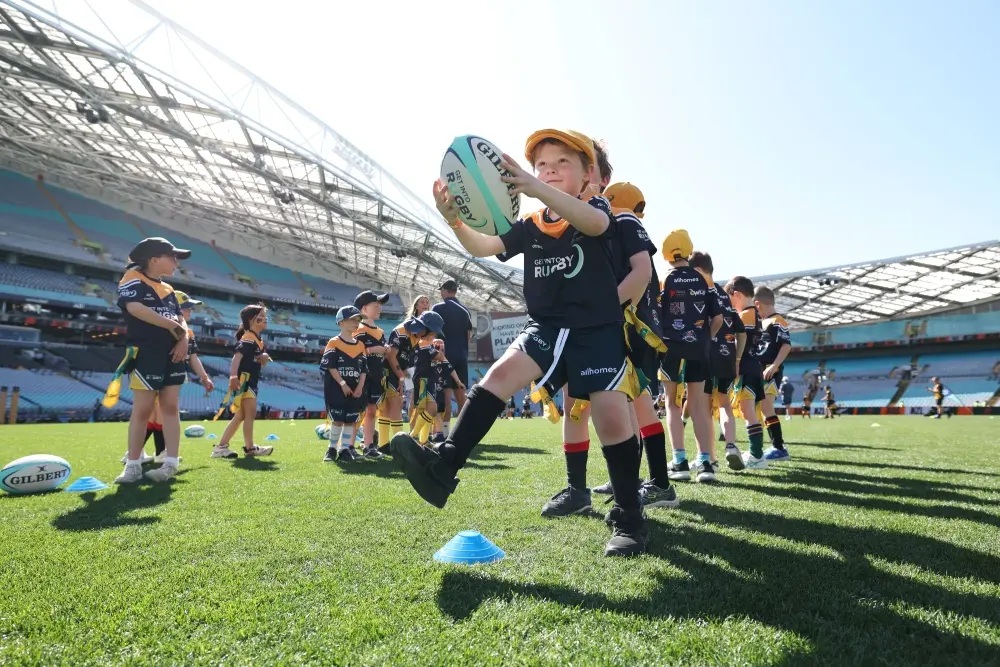
The connection with grassroots rugby will not be confined to the seven host cities. Rugby Australia will provide equipment to more than 600 clubs nationwide through a programme funded alongside the Australian Government and Defender. Each club will be able to choose a package designed for match days, junior training or senior preparation. The bundles will include rugby balls, tackle pads, hit shields, post pads and other training and safety equipment. Chief executive Phil Waugh said the intention was to help clubs “from the bush to the beaches” welcome new players, train safely and expand their activities.
The programme forms part of a A$90 million federal investment linked to the men’s tournament in 2027, the women’s edition in 2029 and their legacy projects. Through Impact Beyond Australia and Impact Beyond Pasifika, funding will support participation, facilities, competitions, coach and match-official education and cooperation with Pacific nations. Rugby Australia is targeting a 30% increase in overall participation and a 70% rise among women and girls by 2029. Waugh has described connecting “clubs to the national teams” as a central objective, so that the attention generated by the matches can lead people towards schools, local teams and accessible development pathways.
From spectators to participants
Around 3,500 people will also become part of that structure through Team27, the official volunteer programme. They will work across transport, accommodation, customer service, fan festivals, operations, media and competition venues. Each host city will have a team identified by its First Nations place name and a figure connected to its local environment, from the Kangaroo Hoppers of Adelaide | Tarntanya to the Quokka Quicksteps of Perth | Boorloo and the Sea Turtle Scrummers of Townsville | Gurambilbarra. Previous experience at major events is not required, and organisers will provide training before the tournament so that residents from different backgrounds can contribute and acquire skills they may use afterwards.
The training grounds will provide the most visible point of contact between the teams and the public, but they form part of a broader process. During the World Cup, communities will be able to attend selected sessions, join clinics, volunteer and share their facilities with international players. Afterwards, renovated changing rooms, club equipment, trained personnel and programmes designed to attract new participants will remain. The connection envisaged by organisers will therefore be built in three stages: bringing teams into local sporting spaces, turning that proximity into opportunities to participate and preserving useful resources after the teams leave Australia.
 Last related articles