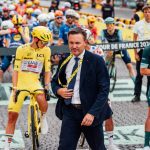
The fight against doping remains one of the pillars of professional cycling’s credibility. Despite technological advances in testing systems and years of work to restore fans’ trust, the sport continues to live with the weight of a past marked by scandals that permanently changed the perception of its biggest competitions. In that context, the president of the Union Cycliste Internationale (UCI), David Lappartient, once again defended the use of extraordinary measures to protect the integrity of the sport.
Speaking at the start of the Tour de France Femmes, the UCI chief supported the use of nighttime anti-doping tests in specific situations and stated that this year’s men’s edition was completed without any detected positive cases. His comments came after the controversy surrounding overnight tests carried out on riders such as Tadej Pogačar and Jonas Vingegaard, a procedure that reignited the debate over balancing rigorous anti-doping measures with athletes’ well-being.
Nighttime testing, an exceptional tool in the fight against doping
Lappartient explained that nighttime testing should never become standard practice but should remain available when technical reasons justify its use. The UCI president noted that certain substances, such as microdoses of erythropoietin (EPO), can disappear from the body within a few hours, making it necessary in some cases to conduct tests at unconventional times to ensure their effectiveness. In his view, the possibility that inspectors can arrive at any moment also serves as a deterrent against doping.
The French official stressed that these measures are not intended to target specific riders but rather to send a message to the entire peloton about cycling’s commitment to clean sport. “There will always be suspicion in cycling because of our past,” he acknowledged, while highlighting the efforts made over recent decades to strengthen anti-doping systems. For Lappartient, the objective is to safeguard the sport’s credibility without turning nighttime testing into a routine practice that unnecessarily disrupts competitors.
A closely monitored Tour de France and a call for transparency
The UCI president also used the opportunity to defend the integrity of this year’s men’s Tour de France. According to Lappartient, the absence of press releases from the International Testing Agency (ITA) announcing positive results indicates that the race was completed without detected anti-doping violations. He noted that the agency only issues public statements when positive cases arise, meaning the lack of announcements reinforces confidence that the event was conducted under effective anti-doping oversight.
Beyond the anti-doping debate, Lappartient emphasized the importance of transparency in sports governance. As a member of the International Olympic Committee (IOC), he said that any reform in professional cycling should first be discussed with teams, riders, and race organizers before being implemented. Without commenting directly on the internal affairs of other governing bodies, he defended a governance model based on ongoing consultation with stakeholders, arguing that participation is essential to maintaining trust within the sport.
 Last related articles