The Oceania dispute raises a question for the sport’s governing body: did its intervention protect an election, or did private electoral interests influence the decisions? World Taekwondo’s handling of a disputed regional election is facing renewed scrutiny after the disclosure of messages attributed to its secretary general raised questions about the independence of the process.
At the center of the controversy are alleged WhatsApp exchanges between Jeongkang Seo and Fadi Jaser Hussein concerning the 2025 Oceania Taekwondo Union presidential contest between John Kotsifas and Maher Magableh. The dispute has since expanded into a confrontation over leadership, disciplinary powers and the limits of an international federation’s authority over a continental union.
The messages and the election timeline
The significance of the messages lies in their apparent timing. An exchange dated 1 July 2025 in the material reviewed by SportsIn attributes to Seo the statement: “I need to speak to Maher also for strategy.” Other remarks attributed to him discuss contacting Council members and ensuring that Magableh would begin with a cooperative team.
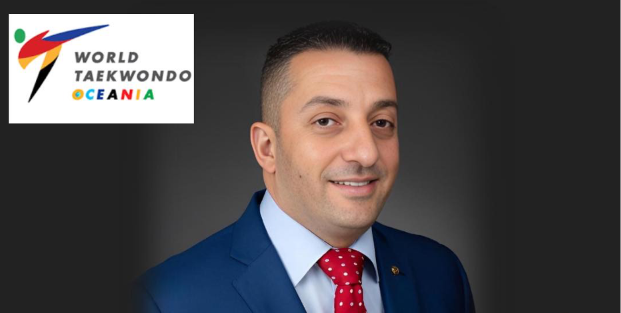
That sequence places the alleged discussions before the 4 July announcement invalidating the May election. Council members elected in May subsequently lost their voting role in the September rerun, which Magableh won.
SportsIn has not independently authenticated the messages or obtained the complete conversation. Their precise dates, context, and relationship to the formal decisions remain central to establishing what happened.
The investigation and the responses
There was an explicit connection between WT’s investigation and the electoral process. In a letter dated 27 August 2025, the ad-hoc election committee confirmed candidates conditionally and stated that relevant findings from the investigation into OTU operations could affect their continued participation. Such a provision can serve a legitimate integrity purpose. Its existence also makes the independence of the investigation consequential for the election itself.
Seo has defended the institutional process. In his response to the allegations, he said he could not verify the authenticity, completeness or source of the communications and maintained that the measures followed formal consideration by the WT Council under the applicable rules.
Magableh has rejected the suggestion that Hussein, who allegedly presented himself as his campaign leader, held an official or authorised campaign role. He denied authorising Hussein to represent him in dealings with WT, denied requesting or approving sanctions against others and rejected allegations that the electorate had been manipulated in his favour.
What the decision-making record must establish
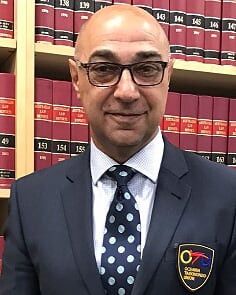 These responses leave a question that can only be answered through the decision-making record. What evidence was put before the Council, who proposed the measures and how were the changes to electoral participation justified?
A formal vote establishes that a governing body took a decision. It does not, by itself, settle whether those who shaped the proposal acted independently. Equally, selected private messages cannot establish that a collective decision was improperly influenced. Both the communications and the institutional record require examination.
Leadership changes, suspensions and reported appeals
The confrontation continued in 2026. In July, an OTU extraordinary assembly voted unanimously for Magableh to step aside temporarily from presidential duties amid reputational concerns surrounding his business. The resolution was framed as an interim administrative measure, without a finding of personal misconduct.
WT withheld recognition of the leadership change and subsequently imposed preliminary suspensions on three senior OTU officials. Those measures were also described as protective, rather than findings that the officials had breached the rules.
Three appeals to the Court of Arbitration for Sport have been reported, challenging WT’s non-recognition, the suspensions and a directive concerning access to OTU records and systems. SportsIn has not obtained the filings or a ruling. Kotsifas has called for an independent examination of the complete WhatsApp record and stated his intention to approach the IOC Ethics Commission. SportsIn has not verified that an ethics complaint has been filed.
The events of 2025 and 2026 belong in the same examination. Whether they reflect a regular exercise of legitimate oversight, an escalation of institutional conflict or improper influence remains to be established.
For World Taekwondo, the issue reaches beyond the outcome of one presidential contest. A federation that intervenes to protect an election must be able to explain how it kept that intervention independent of the candidates’ interests. The credibility of its authority rests on that distinction.
 Last related articles